Lightweight Model Beats GPT-4o at Robot Gesture Prediction
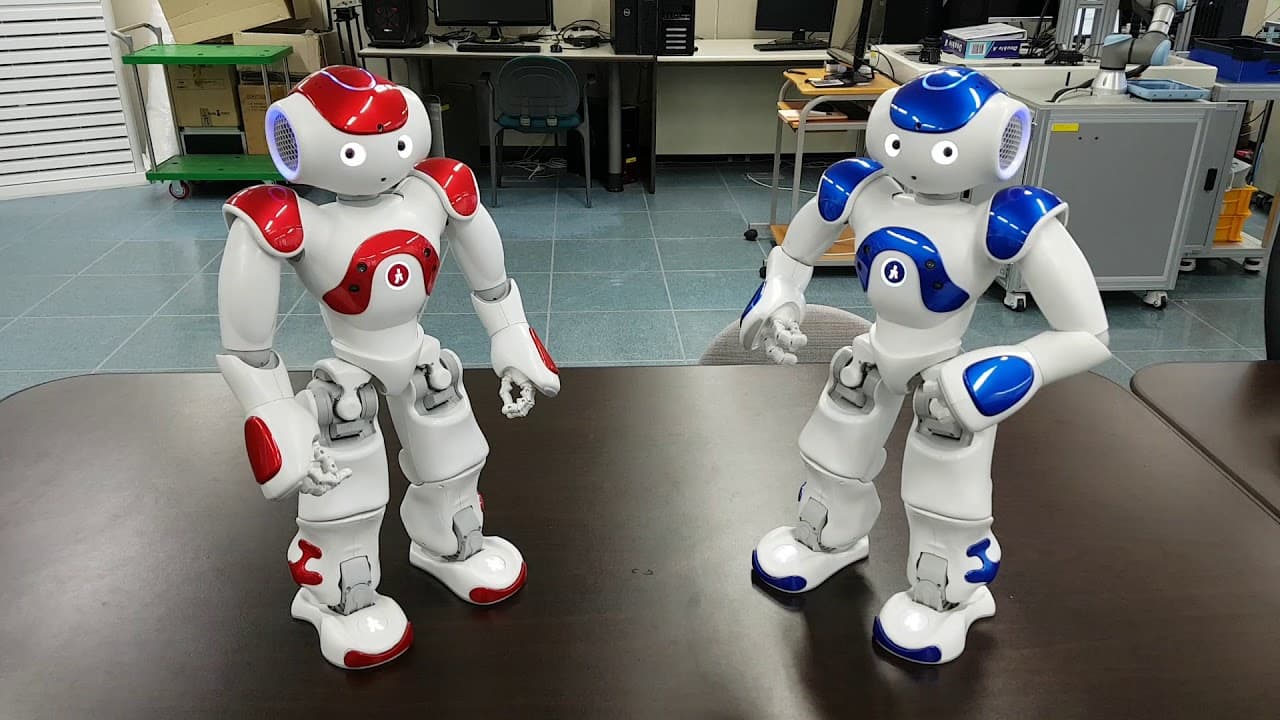
Researchers have developed a lightweight transformer model that generates co-speech gestures for robots by predicting both semantic gesture placement and intensity from text and emotion signals alone, without requiring audio input at inference time. The model outperforms GPT-4o on the BEAT2 dataset for both gesture classification and intensity regression tasks. The approach is computationally efficient enough for real-time deployment on embodied agents, addressing a gap in current robot systems that typically produce only rhythmic beat-like motions rather than semantically meaningful gestures.
TL;DR
- →New transformer model predicts iconic gestures for robots using only text and emotion data, no audio needed at inference
- →Outperforms GPT-4o on semantic gesture placement classification and intensity regression benchmarks on BEAT2 dataset
- →Lightweight architecture enables real-time deployment on resource-constrained embodied agents
- →Addresses limitation in existing systems that generate primarily rhythmic gestures without semantic emphasis
Why it matters
Co-speech gesture generation is a foundational capability for embodied AI systems that need to communicate naturally with humans. Most current approaches rely on audio input and produce only beat-like motions, limiting expressiveness and engagement. This work demonstrates that semantic gesture understanding can be achieved efficiently from text and emotion alone, opening pathways for more natural human-robot interaction without the computational overhead of audio processing.
Business relevance
For robotics companies and embodied AI developers, efficient gesture generation directly impacts deployment feasibility and user experience. A lightweight model that works without audio input reduces system complexity and latency, making it practical for real-world applications like service robots, telepresence systems, and interactive agents. The performance advantage over GPT-4o suggests a specialized approach can outperform general-purpose models on this task.
Key implications
- →Text and emotion signals are sufficient for semantically meaningful gesture prediction, reducing dependency on multimodal audio processing pipelines
- →Lightweight transformer architectures can match or exceed large language model performance on specialized embodied AI tasks while remaining deployable on edge devices
- →Semantic gesture generation is now tractable for real-time robotic systems, enabling more natural and engaging human-robot interaction at scale
What to watch
Monitor whether this approach generalizes across different robot morphologies, languages, and cultural gesture conventions. Watch for adoption in commercial robotics platforms and whether the efficiency gains translate to measurable improvements in human engagement and task performance in real-world deployments. Also track whether similar lightweight, text-plus-emotion approaches prove effective for other embodied AI behaviors beyond gestures.
vff Briefing
Weekly signal. No noise. Built for founders, operators, and AI-curious professionals.
No spam. Unsubscribe any time.